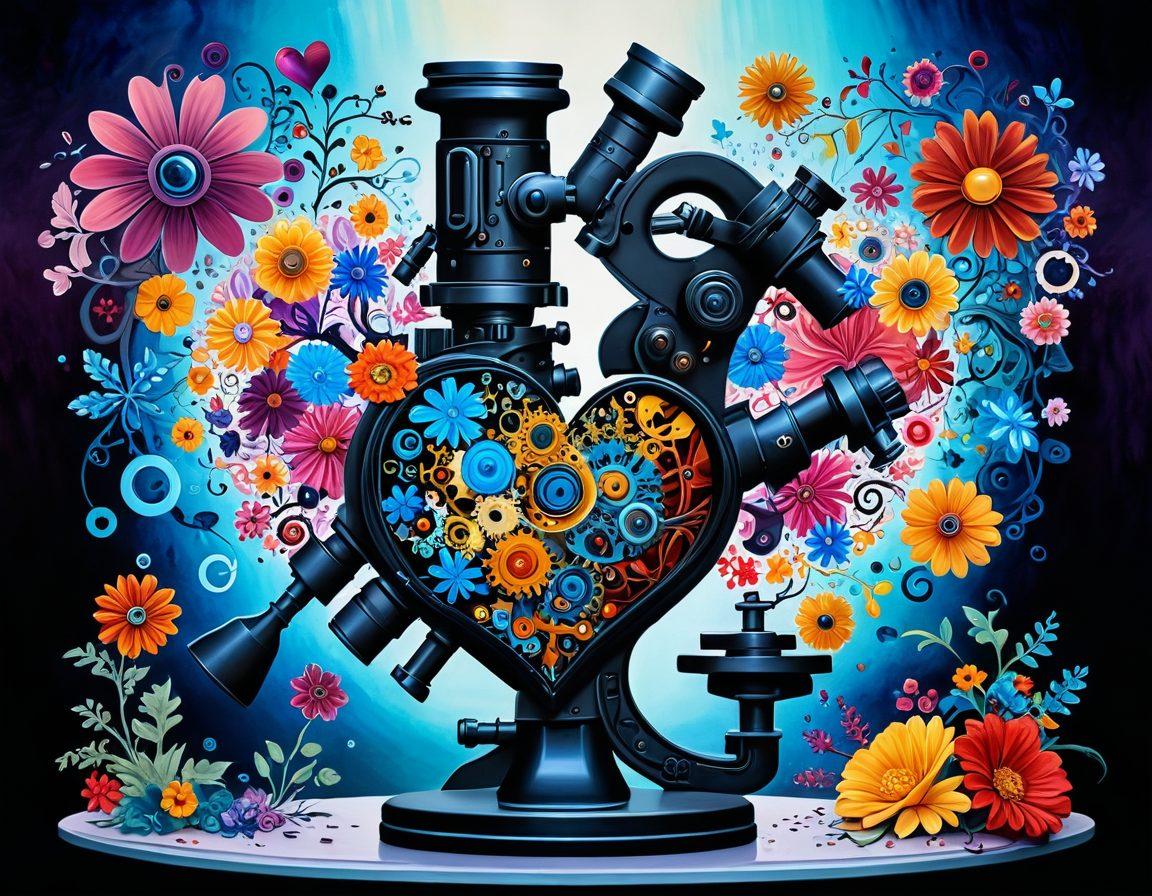
Love Under the Microscope: How Overthinkers and Perfectionists Review Relationships
Have you ever found yourself dissecting a text message for hours, analyzing every single emoji and punctuation mark? Welcome to the world of the overthinker. For all you fellow details-oriented individuals out there, love can feel like a double-edged sword. In fact, we often embody the roles of critics, inspectors, and reviewers—truly becoming the examiners of our relationships. As overthinkers and perfectionists, we can sometimes turn love into a methodical examination rather than a joyous dance. This blog aims to decode relationship dynamics through the overthinker's lens, allowing us to truly understand the intricacies and challenges that come with this way of processing our romantic lives.
Our minds are like an intricate web of thought processes where every action is scrutinized and analyzed. It’s as if we’re using a microscope to view our relationships. We are the fault-finders, the triviality enthusiasts who might obsessively dwell on issues that most would consider minor. Take a moment to ask yourself: how often have you turned a small disagreement into a towering issue? The truth is, overthinking can make the most trivial actions feel monumental, while perfectionism pushes us to seek the unattainable ideal in our partners. This relentless urge to inspect and critique can overshadow the beauty of simply being present and enjoying the moment.
Is it really possible for overthinkers to thrive in love? Absolutely! Understanding our tendencies as scrutinizers can help us navigate our relationships with greater clarity and purpose. Rather than focusing solely on being appraisers of our partner’s every move, we can flip the script—turning to be constructive feedback providers instead. What if we allowed ourselves to embrace imperfections and acknowledge that vulnerability can foster deeper connections? Instead of holding each other to unrealistic standards, let us share our experiences, thoughts, and feelings openly, creating a platform for growth and understanding.
Let’s shift gears for a moment. What if our knack for analysis transformed into a superpower in our relationships? Imagine using our skills as commentators and advisors, guiding our partners towards improvement and understanding without placing undue pressure. By communicating openly, we can build a relationship where reviews and feedback create a culture of support rather than anxiety. Loving someone deeply is about appreciating their quirks, flaws, and even their ‘imperfections’—the very things that make them human. Are we bold enough to change our lens from critical examination to open appreciation?
Finally, remember that love isn’t about perfection; it’s about connection. By engaging with our partners as partners rather than analysts, we create a safer space for both parties. Overthinking can lead to misunderstandings, but it can also pave the way for illuminating discussions. We have to shift our perspective and realize that we don’t need to control every narrative. Instead of being relentless reviewers of our relationships, let’s attempt to be passionate participants, celebrating our journey together. Stay curious, be compassionate, and embrace the wonderfully messy tapestry that love weaves.
Perfectionists as Critics: Navigating Love with Precision
In the world of relationships, perfectionists often exist as fierce critics, tirelessly inspecting every detail of their romantic interactions. With their detail-oriented nature, they become the ultimate examiners of love, scrutinizing not just their partners but also their own emotions and behaviors. Can one truly find love while analyzing every gesture, every word, and even every sigh? Well, let’s dive into this intricate dance of desire and determination to understand how perfectionists navigate relationships—with a pen and a notepad, no doubt!
For the perfectionist, love often feels like an art form that requires the right brush strokes to achieve a masterpiece. These fault-finders have an insatiable need for precision, which leads them to become overthinkers, disassembling each romantic moment into a series of notes and comments. One could say that they are the 'triviality enthusiasts' of the heart, focused on the minutiae that others might overlook. Is it any wonder that minor discrepancies in communication can lead to monumental misinterpretations?
Consider the moment of receiving feedback from your partner. For many, it’s merely a conversation—a chance for growth and understanding. But for the perfectionist, it can feel like a review from a harsh critic. With the mindset of analysts and reviewers, these individuals may find themselves caught in a loop of contemplation, dissecting every phrase and tone. When it comes to love, is there a fine line between constructive feedback and detrimental overanalysis?
This constant appraisal can take its toll. Relationships require a rhythm—an ebb and flow that two people dance to in harmony. However, when perfectionists become too entrenched in their roles as inspectors and commentators, they may risk losing sight of the bigger picture. A good dose of imperfection can be the antidote to anxiety. Sometimes, the most memorable moments are those that unfold spontaneously, without scrutiny or critique. Have you ever laughed at a small blunder that turned into a cherished memory?
Navigating love as a perfectionist may seem daunting, but there’s a lesson in every relationship. Actionable advice for these meticulous heart seekers includes practicing mindfulness to revel in the beauty of the moment, embracing the unpredictable nature of love, and finding joy in imperfections. After all, love is not meant to be a portfolio of perfect moments; it’s meant to be a colorful tapestry woven from the threads of both triumphs and trials. So, how do you choose to see love: as a detailed critique or as a magnificent mishmash of experiences that make life truly worth living?
From Analysts to Advisers: The Intricate Reviews of Modern Romance
In the age of social media, modern romance has morphed from love stories into complex narratives that even the most detail-oriented overthinkers and perfectionists analyze like professional film critics. We’ve all heard the phrase, 'Love is a battlefield,' but for these individuals, it feels more like a detailed emission of reviews rather than a romantic escapade. Relationships are scrutinized to their very core, as if they were a movie passing through the hands of shrewd analysts. Think about it for a second: when the heart becomes a subject of investigation, can love truly flourish, or does it crumble under the relentless gaze of scrutinizers and fault-finders?
As we delve deeper into relationships, the perspective of an individual who perceives love through a microscope can often lead to unexpected revelations. These modern examiners, often seen as triviality enthusiasts or feedback providers, pick apart moments of intimacy with a laser focus. You might ask yourself, when did love become this intricate dance of inspection and analysis? Here’s the thing: what appears to be a romantic proposal could easily turn into a list of pros and cons, with every heartbeat being appraised as if it were a piece of art dropped into an extensive critic's review.
Imagine a couple on a date, sweetly engaged in conversation. But wait, one of them is busy calculating the perfect ratio of enthusiasm, deciphering every glance, every laugh, weighing them as if they were significant indicators of future compatibility. It’s as if every date feels like it’s taking place under the watchful gaze of a panel of commentators who are hell-bent on assessing compatibility through emotional metrics. Is this obsession a form of love or merely a perplexing labyrinth of self-doubt and fear?
One can’t deny that these analysts and advisors often bring a wealth of insight to relationships. Their desire to leave no stone unturned can help couples navigate rough waters—after all, who wouldn’t want a partner who knows every flaw and can guide you through it? But let’s not overlook the repercussions of this continual inspection. Between the lines of seemingly harmless feedback lies the risk of creating an overwhelming culture of perfectionism that ultimately stifles spontaneity and joy. As we ponder this, one might wonder, how can one embrace love without the constant pressure to meet every unrealistic ideal?
To break the cycle of analysis paralysis, we must find a balance. Instead of only evaluating our relationships through the lens of a critic, let's also wear the hat of a collaborator. Perhaps adopting a mindset of curiosity instead of inspection can reignite the spark in romantic relationships. After all, relationships thrive on creativity and connection rather than just data and details. So, fellow detail-oriented souls, let us step back and ask ourselves: how can we transform our insights into companionship rather than criticism? Only then can we truly enjoy love without fear, embracing both its perfect and imperfection sides.